Fish Sauce by Anhthao Bui

Fish Sauce by Anhthao Bui
Fish Sauce is realistic fiction, and Anhthao’s second anthology collection.

Sunday, August 4, 2013

Eating Plants


A Love Reflection


I Love Anhthao:
She is my piece of pie;
Cuter than a butterfly.
When I am with her
I can kiss the sky.
She makes me feel
Like I can fly
Up to the sky.
What kind of man am I
That I deserve the love
Of a woman with such
Beautiful brown eyes?

--Dan Lambert
August 3rd, 2013

Saturday, July 20, 2013

Freedom


Founding Fathers
Fought for Freedom
Lincoln left legacy:
Liberal life
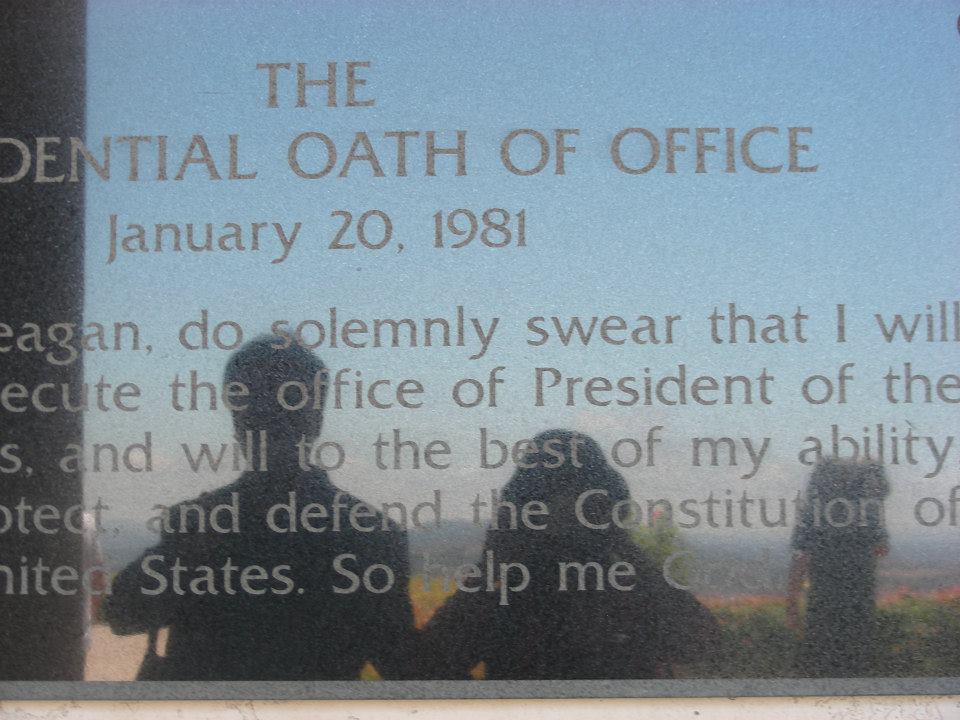
Ronald Reagan
Recaptured Rights

  (Words were read at Reagan Library
June 25, 2013)
Anhthao Bui
 

Wednesday, July 10, 2013

Flowers


The Los Angeles Bridge


One early morning, when I went to Facebook, I saw a message under the photo of my book Fish Sauce, “Daniel and Anhthao, I purchased your books and cannot wait.” I replied, “Thank you.”

I called Dan and asked him, “Dan, who is Khetam? Did I meet her before? Her message is friendly, as if she knew me before.”

Dan explained, “Honey, I do not think you met Khetam before. She is my colleague. She purchased our books because she is also an author and an immigrant like you.”

I asked him, “Really? Do you have her book?”

Dan answered, “Yes, I will show her book to you. Her book is also the textbook for English as a Second Language Students. She teaches ESL courses.”

I replied to him, “Thank you, Dan.”

That afternoon, I went to Facebook, and wrote another message for Khetam, “I look forward to reading your book, The Journey of an Immigrant during the winter break.”

Dan could not find Khetam’s book because he had too many books, so when he reorganized his bookshelf, he did not remember where he put it. I did not contact Khetam until I received her message: “I love your book,” with a photo of the cover of Yellow Flower. I was very happy and replied to her immediately, “Thank you so much, Khetam, Could you do me a favor? Could you post this photo in public? Again, thank you so much for your support.”
Since then, we became friends. I often wrote comments on her posts. I liked her beauty, friendliness, open mind, independence, confidence, and understanding. I thought she was an Indian-American immigrant until I met her in person.    

                        Dan handed me the book, The Journey of an Immigrant: From Farm to Freedom by Khetam Dahi. I was fascinated to read Khetam’s book and to learn more about my new friend.

 In Khetam’s introduction, she honestly reveals her parents’ early engagement and wedding “On his wedding day, he had to call him in to get ready for the day’s event.”(xix) to help the audience learn more about her culture.  Also, Khetam quotes her father’s words to teach her how to succeed in life when she was rejected at her first job “You need to be tough and try again. You will be denied things sometimes and you will be rejected other times. You may lose to others and you may fail in some things, but all these negative things should be lessons and opportunities to get stronger and wiser.” (128). Khetam introducing about her parents like Condoleezza Rice’s introduction about Rice’s parents and Condi’s parent teaching in Extraordinary, Ordinary People : “if you were twice as good as they were, ‘they’ might not like you but ‘they’ [would have] to respect you” (3).   Both Condoleezza and Khetam maintained good relationship with their parents with love and pride about their parents’ wisdom and care. Both Condoleezza’s and Khetam’s parents tasted the bitterness in the United States, so they wanted their children to have a better life and by working hard and education was a sturdy barricade to protect themselves. In the United States ethnic elderly endure unfairness for minority people, so many parents wished their offspring to succeed, no matter whether they were immigrants or not.

 Khetam’s life in Syria and my life in Vietnam were similar. We both shared common daily life and typical cultures. Khetam describes “Most students in town walked to school, but many from the surrounding villages came by bus, on motorcycles behind their fathers or other family members. Some rode their own bicycles or motorcycles” (xvii). The image was also the vivid typical picture of going to school in Vietnam.

Although my family did not live in a farmland, Khetam family’s situation and environment were similar to my family when she told the reader that some people thought that her family was rich because they owned some a large piece of land and a farm, but it was not true because her parents worked very hard and saved every single penny with the hope to provide her siblings a better life. Likewise, our relatives, friends, and outsiders assumed that my family was rich because my parents provided us the best educational opportunities and condition to make us only concentrate on school. I think not only Asian cultures, but also different cultures in the world also share responsibilities with the other members in a close family or extended families.

             Both Khetam and I had similar childhoods with many made up games and toys because we did not have much luxurious toys and games. As young girls, we both enjoyed crocheting, embroidering, stitching and knitting. I liked to sew and made clothes for my dolls, but I asked my older cousin to do it for my dolls because I was not good at, or interested in female tasks. Like Khetam, I was bored to wear my older siblings’ outfits and reused their old school supplies, toys, and their possessions.  Our parents provided us limited new clothes and did not buy new belongings if they were in good condition. We grew up in male dominant cultures, so female had little rights in our society. As Khetam revealed many unspoken forbidden laws and rules for girls, we were tired, confused and felt unfair for us, the girls because we unexpectedly received too many harsh and strict complaints, punishments, and annoyances.   

             I laughed out loud when I read the story about Khetam’s trouble with the bathroom on the airplane—her first experience, opinion, comparison about the restroom on the airplane and the restroom in her motherland on the way to the United States. The story was similar to my story, “Bathrooms,” on the trip to the United States. Khetam used the words, “pee” and “poo” to  provide ESL students daily conversation new words that were big help for the newcomers. I only learned these words right after I got my bachelor’s degree in English because during my undergraduate periods, I only worked and read academic writings, textbooks, and fine literature, so I did not have any chance and opportunities to learn daily conversation and common vocabularies.  

             Khetam describes her hardship, bias, and disadvantages during her journey in the United States. Khetam does not write much about her triumph and achievement, but her real story and her position as a full time English instructor at a community college are real and vivid tokens of her accomplishment. Khetam’s The Journey of an Immigrant is not only the book text for ESL adult students who learn English writing and reading skills with practical and dynamic exercise and common vocabularies worksheets that the English learners need to acquire, but it is also the motivation for newcomers to pursue their dreams as Khetam’s wishes revealing in Note to the Reader.


Sunday, June 16, 2013

Creeping to the Torch of Liberty


 Life is a mysterious and fairy dream. I cannot believe myself that it is true.

When I first set foot in San Francisco Airport, I was only an immigrant who spoke a little English. However, eight years later, I earned a Bachelor of Arts in English degree and became an educator at a public school. Now I am a self-published author with two books written in English. What kudos and privilege I have received from the beneficial nature of the United States. The United States is a gracious fairy who uses a magical wand to transform my doom into radiance. I would like to spread around the world the beauty of the United States and the benevolence of this country.  Uncle Sam provided me with knowledge to empower a timid, female immigrant to become an independent and confident Vietnamese-American woman.

  “Life is not a rose”; the American life is toilsome and severe for any newcomer. However, I believe that the United States is the paradise of opportunity for life, liberty and the pursuit of happiness from Alpha to Omega. The Founding Fathers always find the best ways and solutions to provide the residents contingency and freedom to reach their dreams in their own ways.

Under the control of the Vietnamese communist government, my creativity hyphenated under deep down ground. When I came to the United States, in this rich, knowledgeable, fertile soil and free atmosphere, my artistic seeds started with sprouts, grew up, and bloomed. 

Choosing the English major was a lonely path and a great challenge. However, the passion of writing urged me to overcome tons of hardships. Writing and reading are parts of my daily activities. Writing calms my anxiety and releases my adversity. Writing is also the way I learn English.  Each self-published book is a significant milestone in my life to measure my improvement in learning English, and an expedition to the torch of liberty. The undertaking of this adventure is risky, dangerous, and exciting to test my endurance and to prove my hypothesis about the United States: Life, Liberty and the Pursuit of Happiness.

June 16, 2013

 Happy Father’s Day to the Founding Fathers of the United States!

 Pay tribute to the Fourth of July

Happy Birthday to the United States of America!


Saturday, May 4, 2013

"Sí, se Puede”

Most non-Spanish speakers do not know the meaning of the phrase “Sí, se puede,” but most people who live in the United States are familiar with President Obama’s first presidential campaign slogan, “Yes, We Can,” which led President Obama to become the first African American President of the United States. Not many people know that President Obama’s slogan, “Yes, We Can” is not original with him. His campaign team borrowed “Yes, We Can” (“Sí, se puede” in Spanish) from the slogan of the great Latino-American farm worker, Cesar Chavez,  who, when he was in jail, became the founding father of the national farm workers alliance. Similar to African Americans who are rightly proud of Dr. Martin Luther King Jr., Latino-Americans consider Cesar Chavez their greatest hero of the late twentieth Century.
Sí, se puede,” or “Yes, we can” is also the motivational phrase that educators use to encourage students to keep trying. Thus, in San Jose, California, first and second graders from Cesar Chavez Elementary School, wear a crown on their heads with the words, “Sí, se puede” as they walk to the Mexican Heritage center to celebrate the great man’s birthday. This walk commemorates Cesar Chavez, a poor Latino American farmer who worked hard to help organize Latino American fruit pickers. The students’ crowns remind them that they should not deny their heritage or culture, nor do they need to do big things to make their actions meaningful. At their age, all they can do is work hard to fulfill their duties as students.
Although San Antonio and FUCHA schools are located next to this cultural heritage landmark, Cesar Chavez Elementary School’s students are the first to enter the Plaza. Shortly after they arrive, other students from the Alum Rock School District come and begin to fill the empty spaces. When the last students arrive, there are no empty spaces remaining in the Plaza. The Principal of Cesar Chavez School, Mr. Sanchez, opens the ceremony with a few words about Cesar Chavez, the great man whose non-violent strategy was instrumental in dealing successfully with different people holding different points of view. “Non violence” and “Yes We Can” are also the mottos in Cesar Chavez Elementary School. Teachers help students learn to control their anger, learn to express disagreement with gentle words, and learn to walk away when conflict seems imminent. These skills allow problems to be solved peacefully. Practicing non-violence helps individuals control themselves, and remembering the words “Yes We Can,” gives students and teacher a sense of power over their own destinies as they learn.  
Dr. Martin Luther King Junior’s famous lines from his 1963 speech, “I have a dream...” are known around the world, and his words encouraged people in this country and around the world to share his vision of ethnic equality, pride, and peaceful coexistence. Unfortunately, not so many people know about Cesar Chavez’s leadership in forming the United Farm Workers’ Union.  Cesar Chavez’s UFWU demanded respect and benefits for farm workers laboring in California, but at its core was, like Dr. King’s message of racial equality, it was an idea with unstoppable momentum with benefit for all agricultural laborers: Europeans, Asians, Africans, and white Americans. While Dr. King’s Civil Rights leadership was a volcano shaking the world, Cesar Chavez’s championing of farm workers was an effective groundswell coming from deep in the fertile ground of California’s central valley. Though Chavez’s movement benefitted workers everywhere, only California, Texas, and Arizona celebrate Cesar Chavez’s birthday. Cesar Chavez is a role model for all ethnic immigrants and working people; his life’s story is motivation for them to pursue their dreams with the phrase, “Yes We Can,” in their hearts.